

Enough
Europe should take Trump down

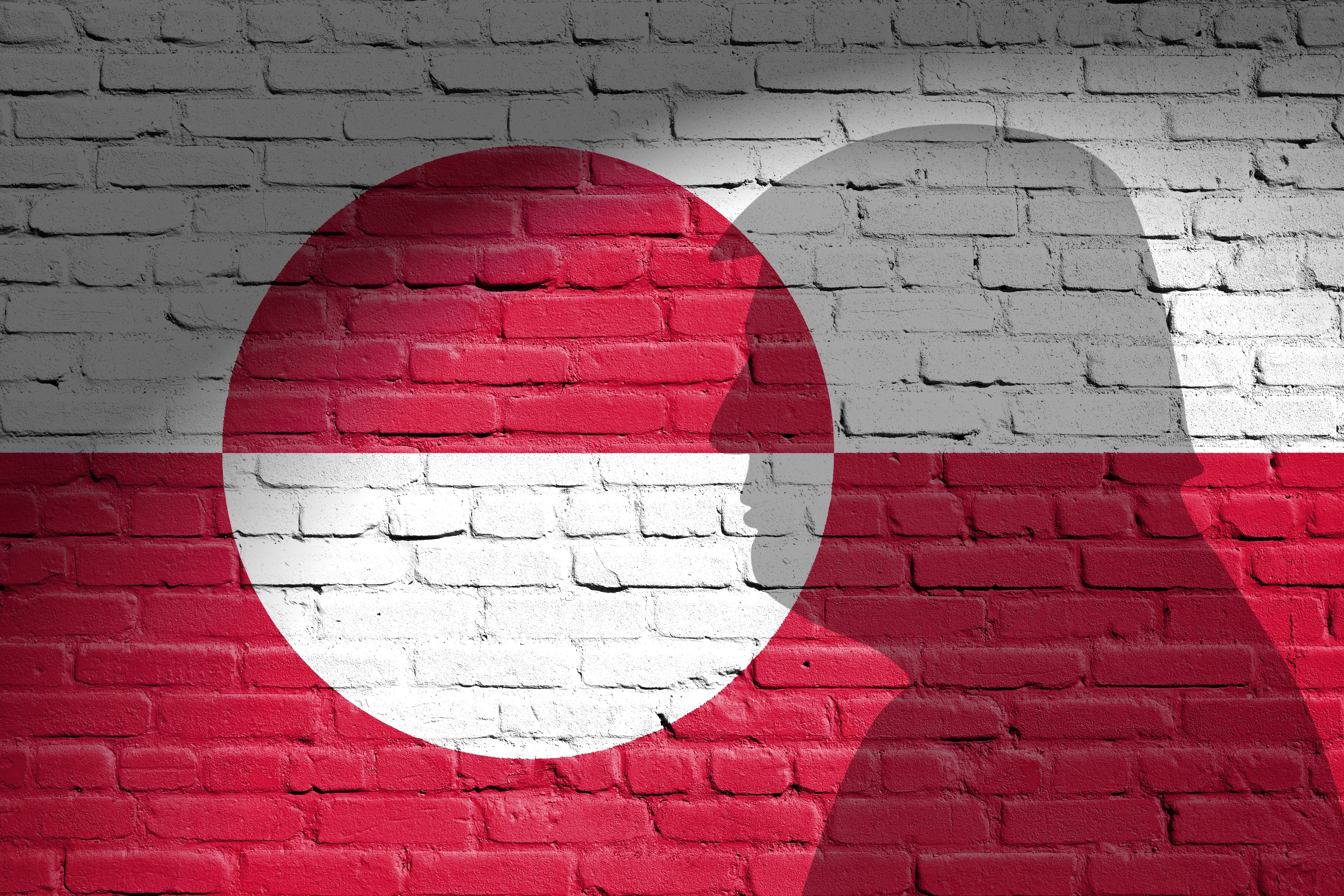
The Mad King’s weekend ultimatum to Denmark and its allies – sell Greenland by June or face a 25% tariff on goods exported to the US – should be the very last straw for Europe’s governments.
Not because the US is using the threat of state violence to blackmail long-time democratic friends, which it is. Not because it’s the most explicit signal yet that the US is no longer Europe’s ally, which it isn’t. Not even because it must now be obvious to Europe’s biggest Pollyanna that any US military backstop for Ukraine would soon melt, which it would.
No, the reason Europe must seize this moment to resist Donald Trump is because he’s weak and has never been weaker. Push back this time and he’ll fall over. It’ll be risky and incur some short-term pain but, if Europe fights back now, it would be doing more than Hugh Grant messaging. It could actually win and, at the same time, scorch the earth for Trump’s putative successors.
Seriously and literally
Let’s first clarify what Trump did on Saturday morning.
First, in a single social-media statement, he torched the US-UK and US-EU trade agreements his negotiators obtained last summer. Themselves one-sided acts of extortion, these “deals” did at least provide sufficient certainty to business that economic growth outperformed (lowered) expectations in the second half of 2025 and promised more in 2026. Even if he confirms his reputation for “TACOing” (Trump always chickens out), the quarter-wit in the White House has reintroduced uncertainty and that will have an economic cost at home and abroad.
Second, he undermined Europe’s “Trump whisperers” – British premier Keir Starmer, for one, but especially NATO’s Mark Rutte and Finnish president Alex Stubb – who still argue that his White House values the western alliance. Only last week, Peter Mandelson, Starmer’s short-lived ambassador to Washington, was condemning “histrionics over Greenland” and claiming Trump just wanted a deal to beef up Danish-led security on the island.
Incorrect, Pete. On January 9, Trump said: “Countries have to have ownership and you defend ownership; you don’t defend leases and we’ll have to defend Greenland”. Expanding on this theme, Scott Bessent, Trump’s Treasury secretary and reputed adult in the room, said after his master’s tweet that the US is just looking ahead to future conflicts with Russia and China. Washington will do this only if Greenland is part of the US, he said. “The Europeans project weakness. The US projects strength”.
Is this clear enough yet, Europe?
So far, the European (including the UK) response has been typical – meetings about meetings, followed by meetings during which anger and resolution deflate and the room looks for de-escalation and time-buying. Even the military response that provoked Trump (a “very dangerous game”) was half-hearted. Between them, eight nations sent fewer than a hundred troops and the German contingent flew home after two days. Starmer, who had sent one whole officer, was upset that Trump couldn’t understand his allies’ subtle message that they were starting to take Greenland’s security more seriously. These reinforcements were there to deter the Russians and Chinese – not the 11th Airborne. Honest.
Whether Trump’s Greenland fixation began with lobbying from cosmetics heir Ronald Lauder and hardened after his successful rendition of Venezuelan president Nicolás Maduro is no longer relevant to Europe. He is explicitly demanding territory with menaces and using tariffs against NATO allies to obtain a quick and cheap “acquisition” while implicitly telling them they are alone against Russian aggression.
Call his bluff
A Greenland Purchase won’t happen. The price tag – anything from $190 billion to $2.8 trillion – is more than Americans will pay. “And that’s just the buy-side problem,” writes Jonathan Last. “On the sell-side, how could Denmark accept any offer from America apart from all-cash? There is no way to structure a deal based on future payments because America has already proven to be an unreliable counterparty and Denmark has no way to force collection”. Besides, Greenland’s inhabitants don’t want annexation.
This means seizure is a genuine threat – along with a surge in US tariffs on European exports – and Europe should respond without hesitation. Suspend the July 2025 trade agreement, which the Americans have just violated. Tell Trump the $600 billion the EU lied about investing in the US by 2028 along with their imaginary $750 billion for energy purchases is no longer coming. Forget retaliatory tariffs. The EU is right to assess that tariffs are a tax on imported goods that is absorbed by US business margins and/or passed onto American consumers. Last year’s data confirm liberal economists’ prejudice that European manufacturers will suffer but not as much as the entire US economy. So, leave those tariffs to one side and unwrap the so-far unused anti-coercion instrument and use it to target US firms selling services in the European Economic Area and exclude others from big public contracts.
Trump’s tariff response will be insane enough to provoke a long-overdue internal revolt. Congressional Republicans and business will rebel together with Bessent and his cosplay-MAGA wing. Most importantly, so will the public whose confidence in Trump’s economic-management skills have tanked over the past year. Swing voters decided to let the coup attempt slide and vote him back in 2024 to bring back the pre-Covid boom years along with deflation. Instead, Trump has obsessed over inflationary tariffs and in-and-out imperial adventures. Europeans should provoke him into another bout of self-harm.
Militarily, rather than deploying a handful of reconnaissance specialists to Nuuk and pretending they’re there to direct Paddington stares at Russian and Chinese warships, Europeans should send combat troops to Greenland. It doesn’t have to be many. Just enough to make an invasion – however velvet – less of a walkover. Fly them in quickly and spell out that they’re to fight trespassers of any stripe. Between them, Europe’s over-exercised and under-used militaries must have 500 nutters looking for a fight with Chris Pratt.
Okay, the price will be the end of NATO and of US intelligence and targeting support in Ukraine. That’s just a formality. You only have to read John Bolton, Trump’s fourth national security advisor, to understand that NATO ended on the 47th president’s second inauguration in January last year. For Ukraine to lose US signal intercepts, satellite surveillance and human intelligence will be a significant blow to its war effort but not as great as it was when Trump withdrew it last March. The European alternatives are not as comprehensive or pre-emptive but at least they’re reliable – at least until British, French and German voters elect their own Russophiles.
In office, Bolton was as craven as Republican Atlanticists and former neoconservatives like Marco Rubio are today. But, until now, they assumed Trump didn’t mean it or he’d soon be distracted and that, besides, he was a winner. Now he’s a loser. Republicans assume they will lose the House of Representatives in the midterms and increasingly fear losing the Senate. Even if the principle of Danish and Greenlandic sovereignty didn’t matter (and it does), Europe should take the cynical route: Trump is ready for toppling. If the Americans need foreign intervention to deliver this, so be it.